
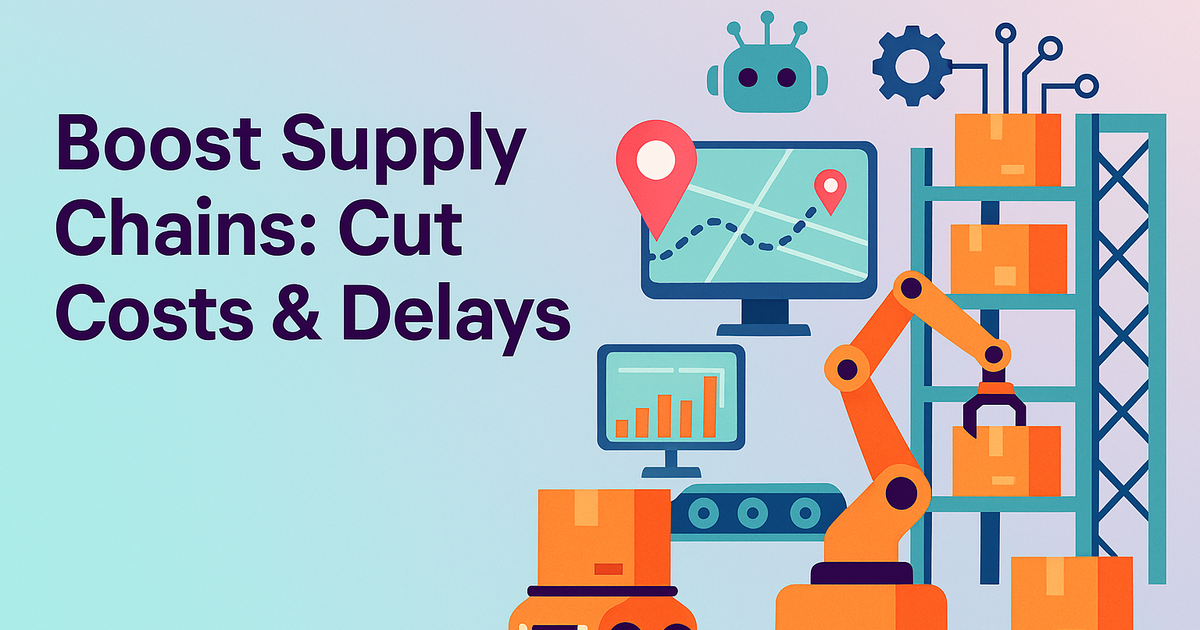
Costs keep climbing every time a pallet is misplaced, a truck leaves half-empty, or a shipment sits unreported in transit. Yet you know a smoother, data-driven operation is possible. Gartner found that companies deploying end-to-end supply chain automation trimmed logistics expenses by 24% on average. In the next few minutes, you’ll see how practical automation from smart conveyors to AI in logistics and robotics removes costly friction, delivers measurable ROI, and finally gives you the real-time control that earlier vendors only promised.
Understanding the Real Costs of Manual Logistics Operations
We’ve walked into plenty of warehouses where clipboards still rule. The result?
- Unseen inventory piles up, tying down cash that could fuel growth.
- Teams chase status updates instead of serving customers.
- Small errors snowball into expedited shipping fees and chargebacks.
Add siloed software, and the pain multiplies across a multi-vendor ecosystem. Missed integrations mean more swivel-chair work, late reports, and zero attribution tracking. No wonder decision-makers have trust issues.
What Modern Automation Actually Looks Like
Automation isn’t a silver bullet robot roaming the aisles. It’s a stack of coordinated technologies working in concert.
Robotics in the Supply Chain
Autonomous mobile robots (AMRs) handle repetitive pick-and-place tasks. They slash travel time and reduce injuries, freeing human staff for exception handling.
AI in Logistics
Machine-learning engines analyze historic orders, weather, and traffic to predict demand and optimize routes. Deloitte reports that warehouses using AI in logistics and robotics saw order accuracy jump 30%.

Real-Time Logistics Tracking
Sensors and IoT gateways push location, temperature, and shock data to dashboards seconds after events happen. McKinsey notes that real-time logistics tracking cuts delay-related customer service calls by 40%.
Digital Supply Chain Solutions
Cloud platforms knit data from TMS, WMS, and ERP tools into one source of truth, enabling automated warehouse management, billing, and compliance documentation.
Business Benefits You Can Take to the Board
Stakeholders don’t buy technology; they buy results. Here’s what warehouse automation solutions consistently deliver:
- Faster Cycle Times: Robots pick faster; AI pre-allocates stock, shrinking order-to-ship windows.
- Lower Labor Cost Volatility: Automation absorbs volume spikes without chasing seasonal labor.
- Inventory Accuracy: Real-time barcode or RFID scans keep on-hand counts within a 1–2% tolerance.
- Customer Satisfaction: Immediate status updates and fewer errors mean higher Net Promoter Scores.
- Data-Backed Decisions: Executives finally see cost-per-mile, dwell time, and SKU profitability in one place.
Roadblocks That Kill Automation Projects (and How to Remove Them)
Tired of vendors who disappear mid-project? These pitfalls are usually to blame:
- Integration gaps: Systems that can’t speak the same language stall go-live dates.
- Scope creep: Vague requirements expand until budgets explode.
- Culture shock: Teams resist new workflows because training was skipped.
- ROI accountability: Providers focus on features, not agreed-upon metrics.
Watch Out
Hidden software license fees often surface late in the cycle. Clarify renewal terms and usage caps up front to avoid nasty surprises.
A Transparent Implementation Framework
Below is the exact sequence we follow on every engagement. Steal it, compare it, hold us accountable.
- Discovery & ROI Baseline We map current costs, throughput, and pain hot-spots. Clear numbers let us prove progress later.
- Pilot & Proof of Concept: Limited-scope tests often involve one zone or lane to validate tech fit, data accuracy, and user adoption.
- Scalable Architecture Design: We integrate, enhance, and execute a modular stack so you can add robotics, analytics, or new carriers without ripping out foundations.
- Phased Roll-Out: Go-live in waves. Each wave ends with a scope management checkpoint against budget, timeline, and KPI targets.
- Continuous Optimization: Quarterly reviews track attribution of savings, uptime, and service levels. If metrics slip, we pivot; no change-order surprises.

Case Snapshot: From Bottlenecks to 99% On-Time Shipment
A mid-market retailer’s fulfillment center suffered two-day cycle times and rising overtime. After installing automated conveyor sorters, AI slotting, and real-time logistics tracking, the facility:
- Cut pick distance by 60%.
- Achieved 99% on-time shipment in peak season.
- Reduced manual exception handling from eight workers to two, redeploying staff to value-added kitting.
The kicker? The project hit payback in nine months because scope, timelines, and ROI metrics were locked before kickoff.
Partnering for Results, Not Just Technology
Panaceatek enters as a trusted digital partner, never a “set-it-and-forget-it” vendor. With 19+ years of simplifying technology, our customer-centric approach centers on three commitments:
- Transparent Process: You see schedules, costs, and risk logs in the shared dashboard.
- Control & Flexibility: Your data, your stack. We build on open standards so you’re never trapped.
- Proven Track Record: ISO-certified delivery and a portfolio of multi-vendor ecosystem integrations that meet or beat SLA targets.
We own ROI accountability all the way to executive read-outs because your board room cares about margins, not microchips.
FAQ
Q: How long does a typical warehouse automation solution take to deploy?
A: For a mid-size facility, a phased approach usually spans 4–6 months from discovery to full production. Pilots start showing results in as little as six weeks.
Q: Do I need to rip out my existing WMS?
A: Often no. Modern automated logistics systems connect via APIs or middleware, letting you protect sunk costs while extending new capabilities.
Q: What if our volumes fluctuate heavily during peak season?
A: Smart logistics solutions scale capacity dynamically, robots can be rented short-term, and AI engines auto-tune resource allocation without permanent headcount increases.
Let’s Talk. No Pressure, Just Clarity
Ready to turn costly friction into measurable gains? Schedule a 30-minute strategy call. We’ll review your current operations, share benchmark data, and outline a right-sized roadmap, no slideware fluff, no surprise invoices. Your business, your decisions, our expertise.
Logistics automation has already reduced costs and delivered real-time supply chain automation control for peers across the industry. It can do the same for you, minus the vendor nightmares. Let’s start that journey together.